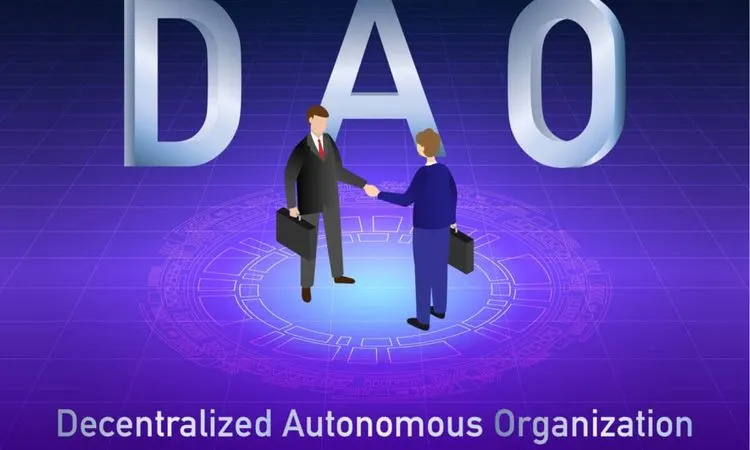
What's the benefit of a DAO?
Traditional organizations are characterized by a leadership structure that is usually headed by a select few or only one person at the top of the corporate governance apparatus. While this has benefits – quicker decision-making, for example – there are risks of giving so much power in the hands of a few.
The concept of Decentralized Autonomous Organization (DAO), which became popular with the rise of blockchain technology, is seen as a solution to the poor governance structures that plague traditional types of organizations. In other articles, LearnCrypto examines the DAO concept in depth and discusses the practical steps for creating a DAO.
How is a DAO different from other organisations?
A blockchain-based form of organization that governs itself through a community-based approach and is facilitated by a native crypto token.
- It is blockchain-based because DAOs use blockchain technology. They use digital ledgers to record their history and to ensure all dealings are transparent.
- It governs itself through a community-based approach because it brings together people with a shared purpose to fulfil common objectives.
- It facilitates governance with a native crypto token because it is this token that determines who holds power in the organisation. Typically, the more contributions a member makes to the organisation, the more tokens they gain and with that, the more power they hold.
Benefits of a DAO over traditional organisations
Although the blockchain ecosystem and DAOs are still in their infancy, their rapid growth has attracted a lot of attention in recent years. DAOs provide several major benefits that become more important over time, especially relative to traditional organizations. As blockchain technology becomes more popular and user-friendly, the customer base is likely to expand
Decentralisation
Decentralisation’s main attraction is that it promises to make organisations much less susceptible to manipulation and corruption than traditional organisations. Especially since the late 1990s, there is sound academic evidence that proves that increased decentralisation is closely associated with decreased corruption.
This is mainly because DAOs support greater accountability and facilitate monitoring. For instance, a DAO on a public blockchain is entirely public so every user can be held accountable for their vote. A decentralising approach reduces the likelihood of collusion as well.
Community-based approach
Many DAOs have found that, apart from the technological aspect of the equation, the DAO’s true foundation lies in its community.
DAOs generate equal access for people anywhere in the world to join a community and connect with each other to fulfil a common purpose. Every community member gets a genuine opportunity to shape the future of the organisation in a fair manner. The decision-making process is distributed among token holders, namely community members, and not the boardroom as a classical trait of traditional organisations.